
"DIY" Teeth Straightening: the Magic
Alternative to Braces? Rubber Bands and 3-D printed trays: Seriously?...Seriously dangerous!
By: Taylor
By: Taylor
Most orthodontic patients want braces to improve their smiles. Sure, getting a healthy bite is important but more than anything, they want to feel more confident about the way they look. Braces can be expensive though and can take 1-2 years depending on the case. Have you heard about a scary trend of using a tiny hair elastic that anyone could purchase by
the hundreds at a drug store to close spaces without braces though?
Let's admit it: social media is more effective in today's socitey than that local newspaper that gets dropped off to your house on Sunday's. There are hundreds of different sites and apps at the tips of our fingers that help connect information or people in different ways such as Facebook, Twitter, Instagram and last but not least, Pintrest. Pintrest is great for creative ideas for hair, makup and delicious recipes but is it really the answer to all of our orthodontic questions? Recently, posts on Pinterest have been highlighting how someone can use a hair elastic to close those little spaces between our front teeth! But at what cost and risk?
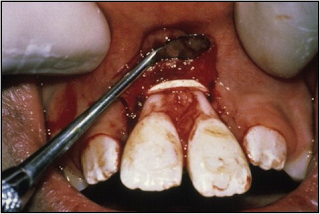
What most people don't realize is the damage these at-home remedies have on their teeth. The American Journal of Orthodontics and Dentofacial Orthopedics issued a consumer alert about the use of elastic bands by non-orthodontists to close gaps in teeth which stated that while there are some people that have done this on their own with little or no harm done to the teeth, the rubber band can "slide into the soft tissues, where it is difficult, if not impossible, to retrieve it, then continue along the length the roots, destroying the periodontal attachment and produce inflammation". They then stated that "the teeth then extrude, the crowns of the teeth fan out as the roots are pulled together, the teeth become increasingly mobile" which can lead to tooth loss. I think we can all agree that the tiny space is NOT worth losing your teeth over. Let's leave the teeth-straightening to the professionals.
Here are some examples of what people attempt vs what really happens: Warning...some of the photos are graphic:


Let's admit it: social media is more effective in today's socitey than that local newspaper that gets dropped off to your house on Sunday's. There are hundreds of different sites and apps at the tips of our fingers that help connect information or people in different ways such as Facebook, Twitter, Instagram and last but not least, Pintrest. Pintrest is great for creative ideas for hair, makup and delicious recipes but is it really the answer to all of our orthodontic questions? Recently, posts on Pinterest have been highlighting how someone can use a hair elastic to close those little spaces between our front teeth! But at what cost and risk?
What most people don't realize is the damage these at-home remedies have on their teeth. The American Journal of Orthodontics and Dentofacial Orthopedics issued a consumer alert about the use of elastic bands by non-orthodontists to close gaps in teeth which stated that while there are some people that have done this on their own with little or no harm done to the teeth, the rubber band can "slide into the soft tissues, where it is difficult, if not impossible, to retrieve it, then continue along the length the roots, destroying the periodontal attachment and produce inflammation". They then stated that "the teeth then extrude, the crowns of the teeth fan out as the roots are pulled together, the teeth become increasingly mobile" which can lead to tooth loss. I think we can all agree that the tiny space is NOT worth losing your teeth over. Let's leave the teeth-straightening to the professionals.
Here are some examples of what people attempt vs what really happens: Warning...some of the photos are graphic:


We recently had a patient come into our Barberton office requesting to have her space closed. She attempted to close the space on her own with a hair tie and showed us a picture she took on her cell phone of her own mouth. Notice in the picture how the gums are red and swollen. The rubber band was trapped under her gums. Luckily she sought the services of a specialist and corrected the problem before a serious issue occurred. Believe it or not, this stuff is happening in Akron Ohio.

What about 3-D printed retainers to move your teeth? Yup, someone has tried it. See the link below for the article: http://makezine.com/2016/03/20/can-you-fix-your-own-teeth-with-3d-printed-retainers/
Our suggestion, if you want your teeth straightened, see an orthodontist. As orthodontist has 6-7 years of advanced education after 4 years of college. We are the professionals and the easiest and cheapest way out is rarely the best. If you live in the Akron Ohio area, don't try to do it yourself at home. Give us a call to discuss your needs and schedule a complimentary consultation.


